We are routinely infantilised and seemingly never permitted to take full credit for our positions. I wonder if you can relate?
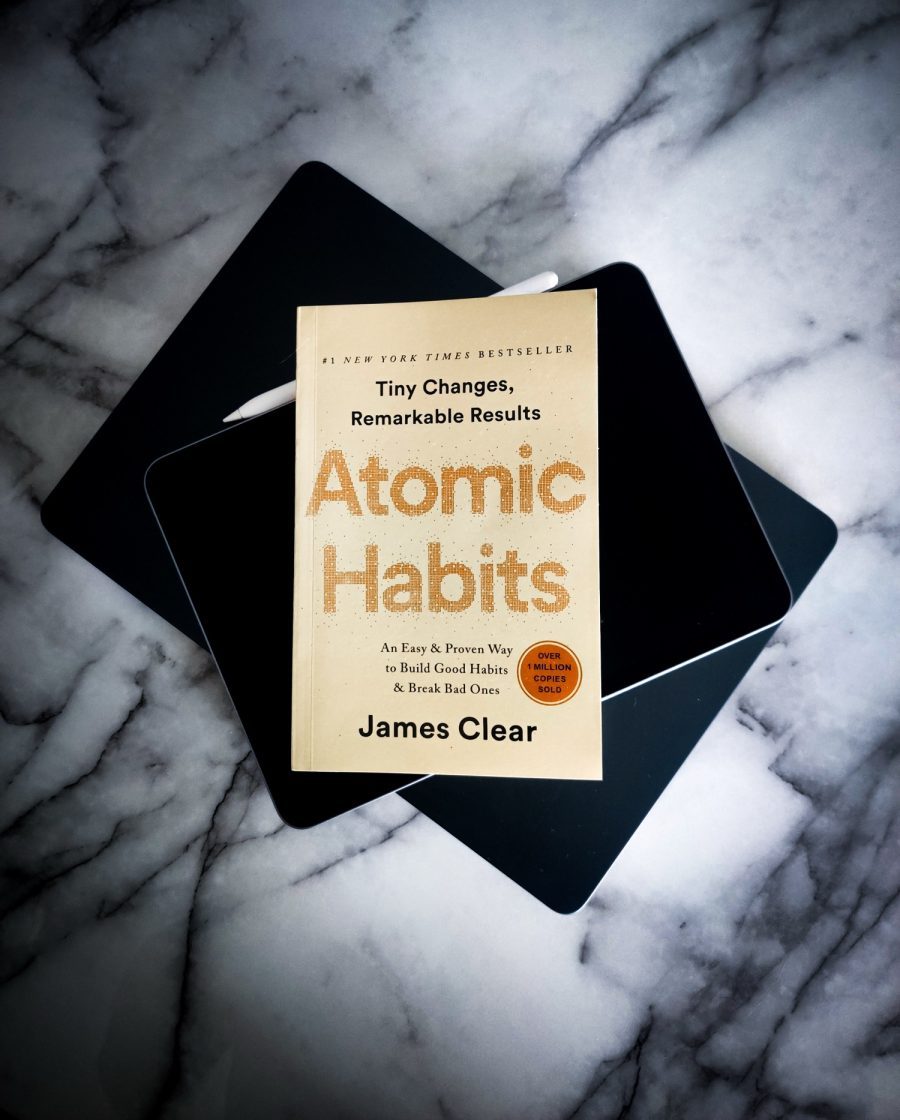
I recently read the well known book, Atomic Habits, by James Clear. First published in 2018, this book has seen a surge of popularity over the years due to the easy-to-understand, stepwise approach offered by the author. Slightly late to the party, I conceded I ought to give it a read to see if there was anything that could be gleaned given how ubiquitous the book seemed to be.
On first impressions, I wasn’t sure where the book was headed. Clear initially articulated how he was neither a productivity expert nor a behavioural psychologist by background, which immediately led me to doubt the credence of this book and instead consider it to be more of a compilation of anecdotal guesswork. However, as I continued to read, my opinion morphed into the following: the greatest wisdom is in the detail. Overall, the narrative is pretty generic, with broad examples and heard-before advice, but the seemingly more minor points are the ones that offer the best knowledge. One such nugget of wisdom that I came across really hit home and was actually something I had already been doing…
Clear explains in his book that habit formation is linked to 3 specific factors that we can adapt: our objective, our purpose, and our identity, the most powerful. He gives the following excellent example to contextualise his point:
Two people who smoke are offered a cigarette but they’re both trying to quit smoking.
Person A says words to the effect of “I am trying to quit smoking”.
Whilst on the surface this seems benign, it’s actually regarded as a passive remark and indicates an effort which is out of keeping with the person A’s habits. It is hence much easier to slide back down the proverbial slippery slope, because they still subconsciously identify as a smoker.
In contrast, Person B says words to the effect of “I am not a smoker”.
This statement may not seem massively different from that of Person A. However, it crucially indicates a shift in identity that reflects an inner mindset that is already programmed to change. Person B no longer identifies as a smoker and therefore, by definition, they do not smoke. When offered a cigarette, it is out of keeping with their identity and therefore, they are much less likely to smoke (within the confines of hypothetical scenarios and notwithstanding lifestyle nuances). It forms the perfect bedrock for quitting smoking because the identity change catalyses the behavioural change required to alter the habit.
So, to simplify the concept: if you believe in something and embody it, you are more likely to manifest it. You can improve your performance by making what you’re trying to embody into a habit.
Which brings me onto why this reasoning should be applied to other situations, including healthcare. As doctors in the NHS, we encounter many different tiers of staffing, from Foundation Training (our first job out of Medical School), all the way to Consultancy, which many perceive to be the final hurdle in the continuum. However, there is this frustrating middle ground that has undergone many a name change, from Senior House Officer and Registrar to Junior Doctor for a few years, and now to Resident Doctor. I personally have always felt a bit lost during this period and this has undoubtedly contributed largely to my sense of disenfranchisement. We are routinely infantilised and seemingly never permitted to take full credit for our positions. I wonder if you can relate?
So, to bring this round full circle, here is how I apply James Clear’s theory of habit formation in real life. Whenever I meet a patient, I introduce myself as follows:
Hello. My name is Mr Zaver, one of the Registrar Orthopaedic Surgeons.
I strongly believe if you are a Registrar in a surgical specialty then you should call yourself a surgeon. You routinely perform operations as the first surgeon in accordance with your job description. You are the first senior port of call for surgical emergencies and new patients admitted through A&E. It’s essential to clearly communicate your role to ensure patients understand exactly who you are and what you can offer them. It helps to firmly banish the imposter syndrome gremlins and instil confidence in the patient that you are the right person for this job. There’s absolutely no point in downplaying your level of skill in the name of “humility” given how much hard work and sacrifice goes into this career. Don’t get me wrong, I’m not advocating you oversell yourself either. I personally always state I’m a Registrar Surgeon, to emphasise the very clear distinction between myself and the Consultant Surgeon. Going against this would be severely unprofessional.
I strongly believe if you are a Registrar in a surgical specialty then you should call yourself a surgeon.
So, by identifying as a surgeon, I have automatically enabled myself to hard-wire the behaviour required to be proficient in this professional role. I have allowed myself to take more pride in my work, develop a more diligent work ethic, and execute my work with greater confidence through enhancement of my self worth. I have manifested the habits that make me a surgeon by enabling myself to believe I am a surgeon. This in turn has contributed positively to my overall performance. If you don’t identify as a surgeon, how will you ever believe in your role and cultivate the necessary behaviour or habits to excel?
I’d love for you to try this too if you’re in a similar position. And if you’re not in healthcare, give manifesting your identity a go and see what happens!
Be sure to subscribe to stay up to date with my posts and let me know how you get on with what I’ve described in this post!
 Vasudev Zaver