
I’m going to preface this by saying that we didn’t actually see a lot of Mumbai itself for reasons that will become clearer in time. But because this was the beginning of our second leg of traveling, I thought it only appropriate to commence my first travel diary entry from this particular juncture. An additional reason lies in homage of a little boy named Billy Watson, who was a charming character in a novel by Amor Towles that I recently read. According to Billy, a story must start in medias res; that is, a good story must begin in the midst of things. So that is why we start the diary in Mumbai, since this was precisely the midpoint of our traveling extravaganza.
It was early afternoon on the 7th of November 2022 when we finally arrived in Mumbai. Having barely slept on the eight hour long direct flight to Chhatrapati Shivaji Maharaj International Airport, we exited the taxi on the doorstep of our hotel with as much energy as a dead fish. Bedraggled and under-slept, we hauled ourselves through a body scanner into the atrium of what is quite possible the most astonishingly grand hotel I have ever set eyes upon.
Now, the term “body scanner” should have been a clue as to the type of hotel we were checking into. After all, the Taj Mahal Palace and Tower Hotel was not only the flagship hotel in the Taj Hotels collection, but it was also the unfortunate site of the heinous Mumbai terror attack fourteen years ago. Nevertheless, the hotel had recovered over time with some renovation and was now as grand as ever. The decor was palatial yet simultaneously understated, exuding cultural flair with sleek sophistication. We were greeted with warm smiles and silky smooth service which completely took us by surprise, having never frequented anything near as resplendent as the Taj.
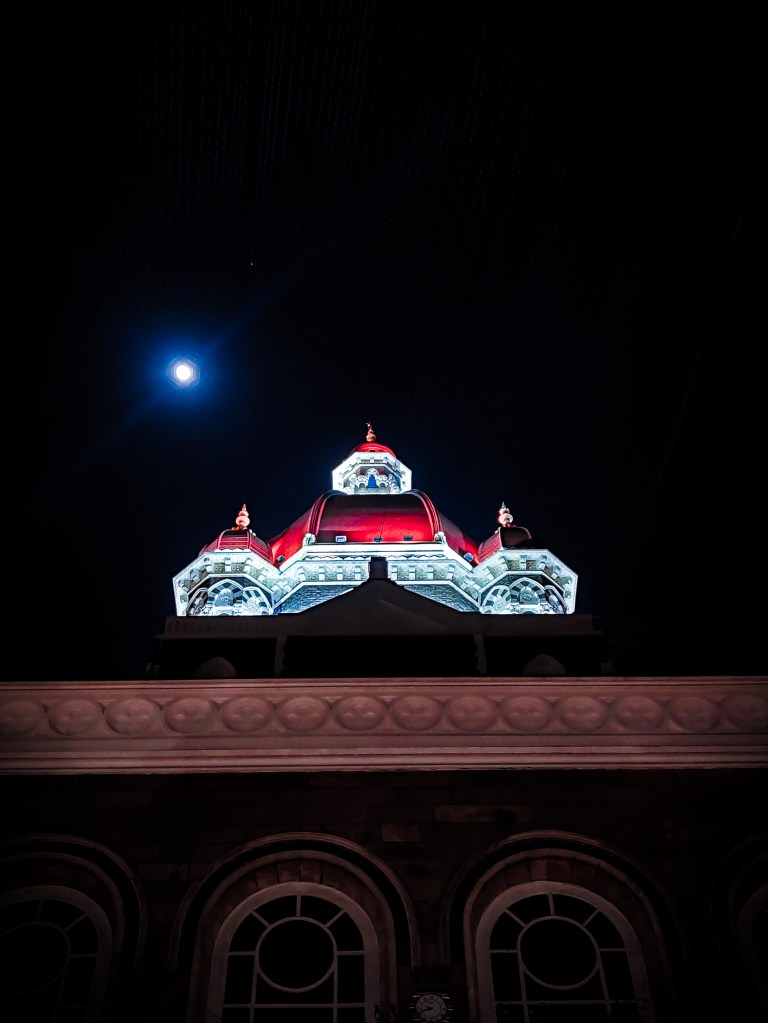
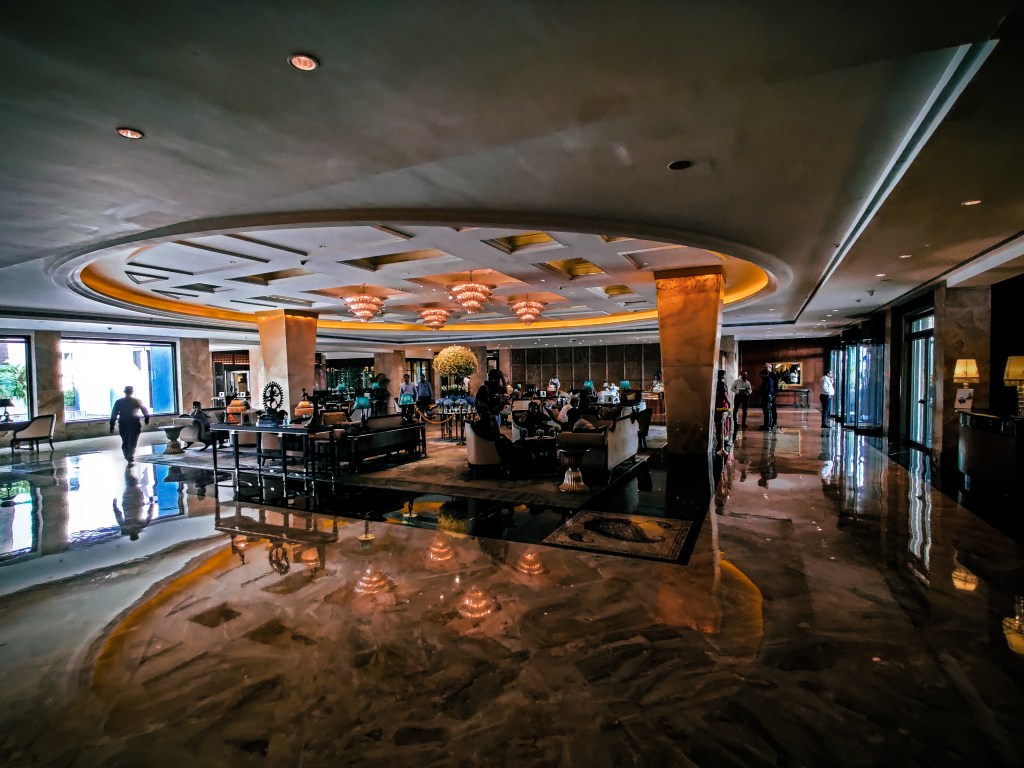

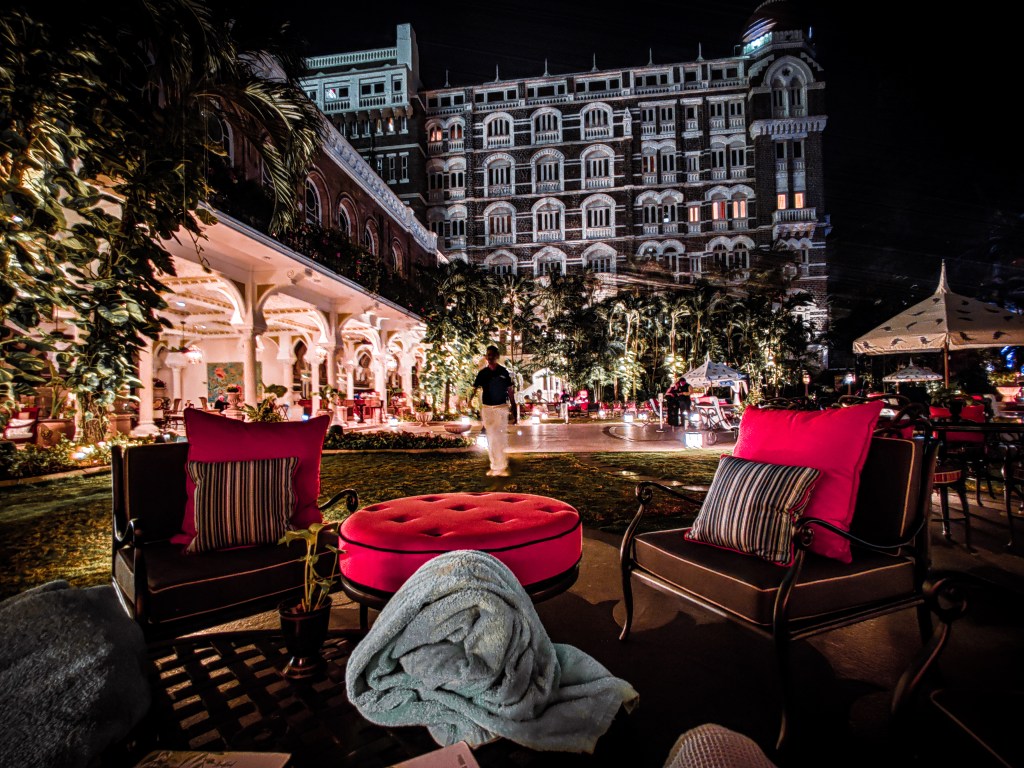
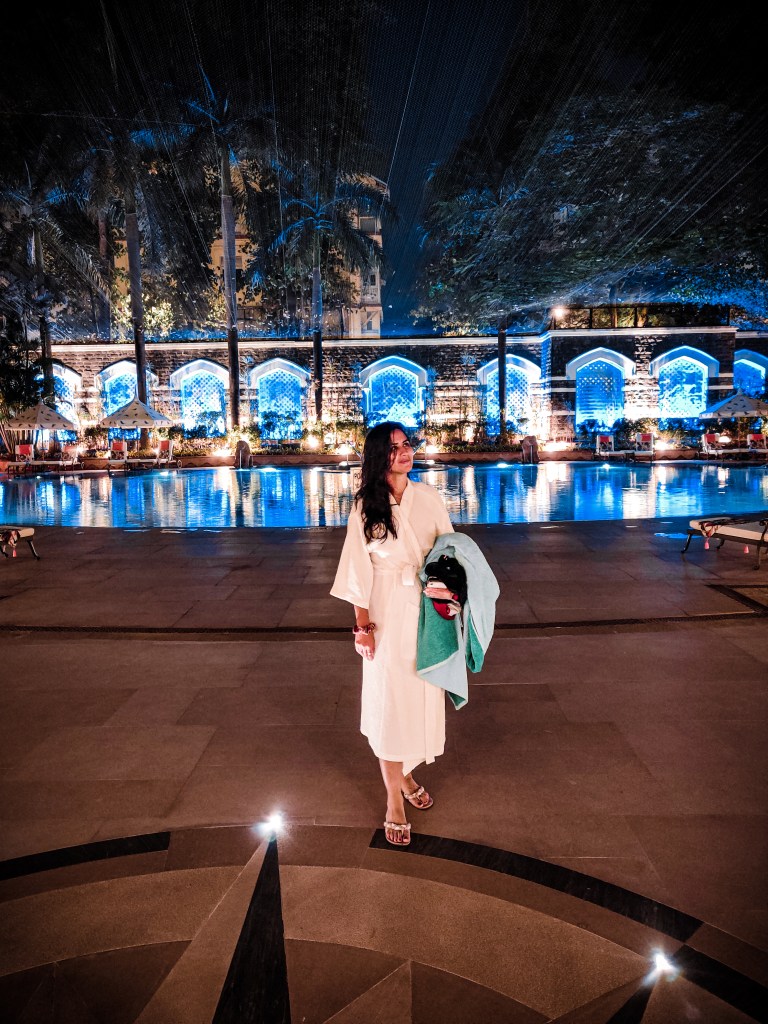
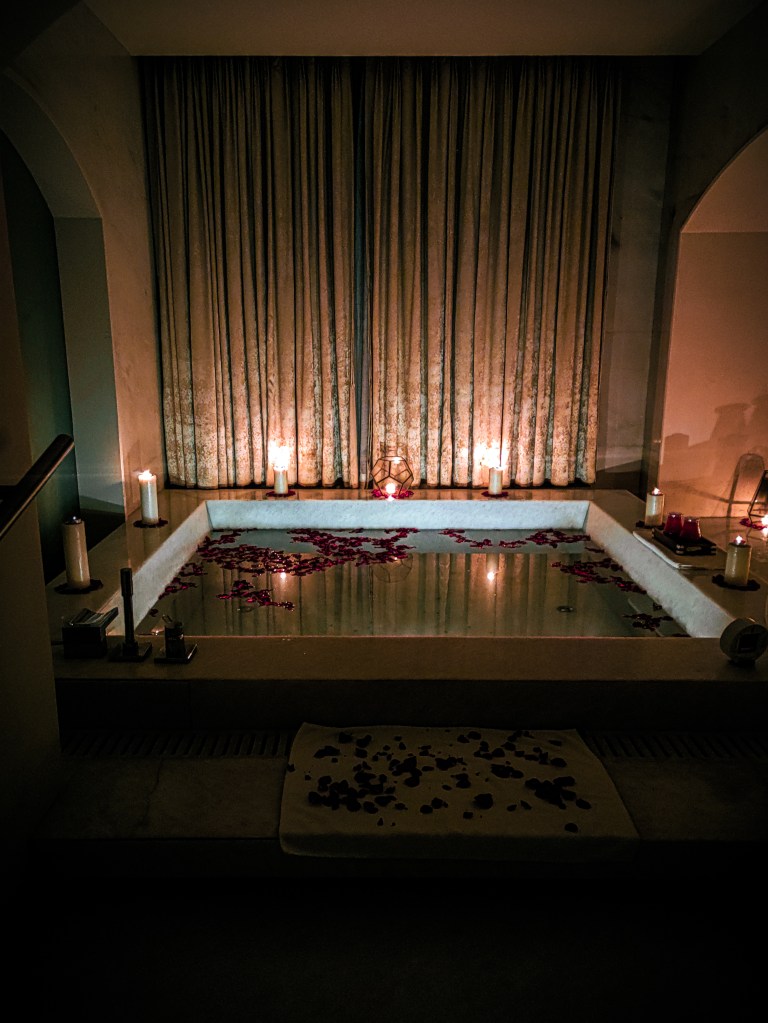
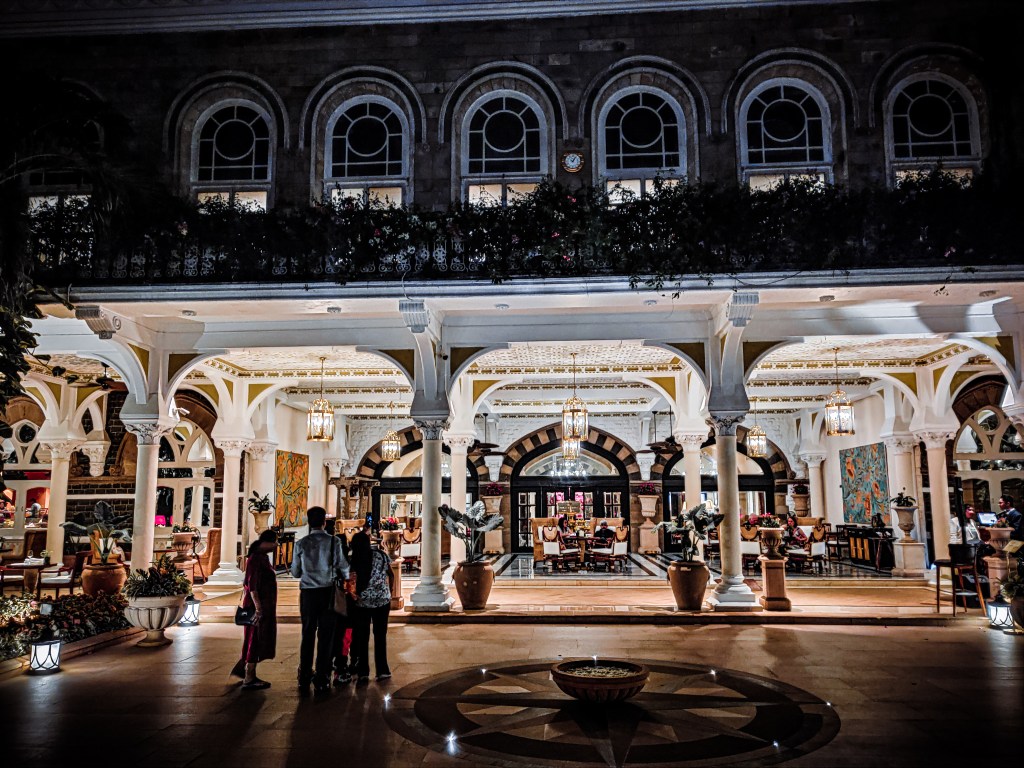
So this was quite assuredly the experience of a lifetime thanks to my mother, who had gifted my fiancée and I with a two-night stay at this magnificent establishment. When we reached our room, we immediately buried our heads in the soft, cloud-like pillows to take a nice long nap and sleep off the debilitating post-flight exhaustion. Eventually, awakening to the painstaking sound of my alarm, we ventured out into the neighbouring streets of Colaba to find some food and see a bit of Mumbai.
When it comes to food, Mumbai is truly a foodie’s paradise. And I don’t mean that lightly, although I acknowledge that I may be biased given my Indian heritage. As is in fact the case with pretty much anywhere in India, the variety of food that one can enjoy is just astounding. I’ve heard the phrase “oh yeah, but it’s all just curry”. My answer to that is simple: kindly, get in the sea. From street food to a full dinner spread, there is nothing that Indian food cannot encompass and deliver with passion, pizazz and mind-boggling flavour. There is quite literally something for everyone. All I’m saying is you have to try it at least once in your life otherwise you truly are missing out.
We spent a total of three nights in Mumbai, two of which were at the Taj, and one of which was at a depressingly run down hostel in the vicinity of the Taj, a mere three or so streets away. I must add, I had been so spoiled by our experience at the Taj that the prospect of checking into a much more affordable option completely floored my intrepid volition. So much so, that I even enquired about the possibility of staying another night at the palatial residence. Sadly, the decision was settled for us in the form of a price that quite easily accommodated a whole week’s stay at the aforementioned hostel. Checking out of the Taj with a crestfallen demeanour, I hardly had the heart to tell the receptionist who greeted us in the foyer that we were not in fact flying to another lavish destination but simply moving out to, for want of a better phrase, a nearby halfway house. I really had been unregrettably spoiled rotten.
Nevertheless, we maximised our sojourn at the self-contained oasis of the Taj, enjoying the pool, spa and fitness facilities as well as the lovely Aquarius bar and Shamiana restaurant. This did end up consuming most of the time we had available for sightseeing but we didn’t let that restrict us. We forged ahead with our excursions, visiting the India Gate, the Chhatrapati Shivaji Maharaj Terminus, and the Elephanta Caves in our short time there.
Our sightseeing itinerary:
- Chhatrapati Shivaji Maharaj Terminus
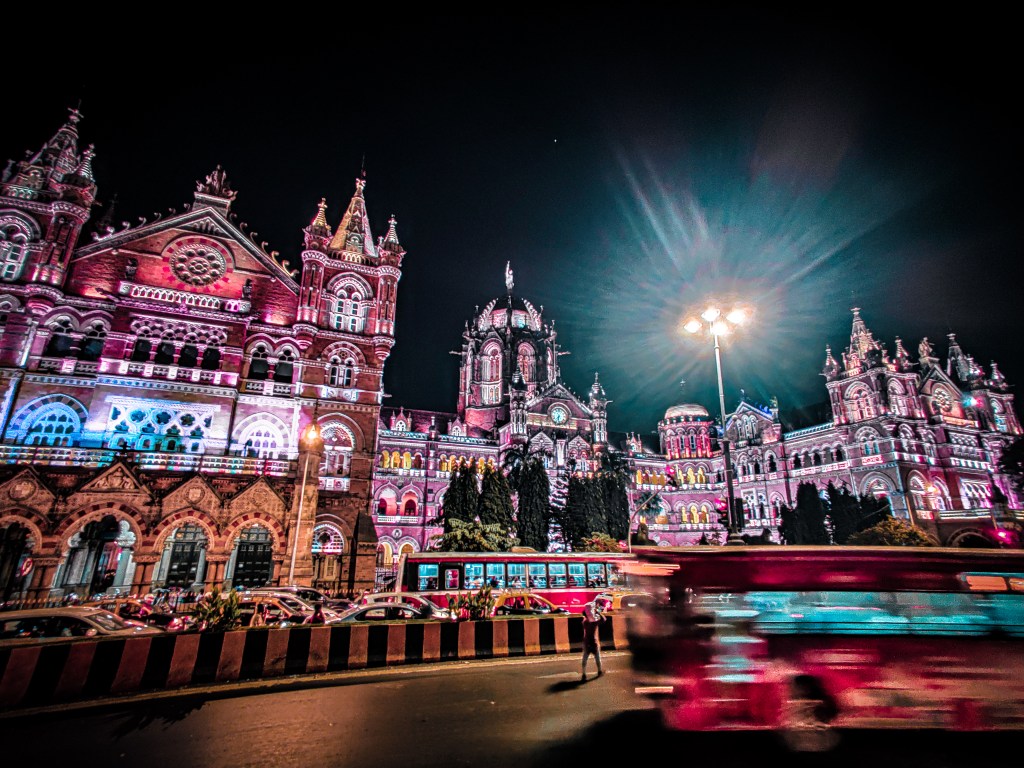
The Chhatrapati Shivaji Maharaj Terminus really is quite a place. The terminus is still a functional railway terminal that has been granted the impressive accolade of UNESCO world heritage site. It was built in 1887, at the time of the British Raj and specifically during the reign of Queen Victoria. Interestingly, the train station was accordingly assigned the name “Victoria Terminus” until it was renamed Chhatrapati Shivaji Terminus in 1996, after the 17th century king Shivaji, and subsequently updated to Chhatrapati Shivaji Maharaj Terminus in 2017.
When it comes to visiting this grand railway terminal, it is possible to venture inside what is ostensibly the terminus, but is in fact a newer railway station that has been tacked onto the original structure. The historic terminus now only houses government offices and entry is prohibited to us mere mortals. However, there are still two main vantage points from which to see the exterior portion of the terminus. You can either admire it from the pavement just outside the terminus, which is perfectly fine but it is difficult to appreciate the full scale, or you can go on a suicide mission to reach a specially constructed platform in the middle of a junction surrounded by the traffic equivalent of world war three. The opportunity for a quintessential photo is much more viable here but you may lose an arm or a leg in the process, so do so at your own peril. Fortunately, we survived this endeavour with all appendages intact.
- India Gate
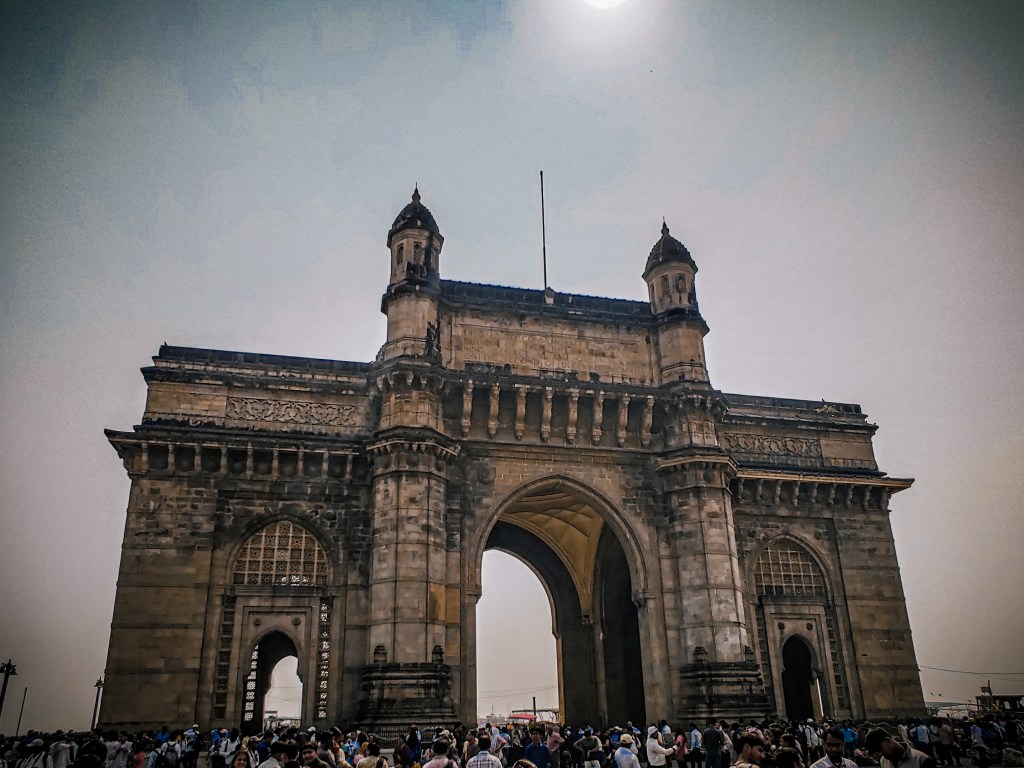
The India Gate is another monument in Mumbai that was built during the British Raj. Whilst this may not appear to convey much of an authentic connection to the native people of India, the gate is historically significant in the exodus of British occupants through its archway following the country’s liberation from British rule.
Structurally, the gate is impressive to observe with its tall, austere stature, high arches, and colonial design thanks to the British architects of that era. Despite the barriers that prevent entrance to the interior aspect of the gate itself, you can still walk to within a few metres of it and gaze up at the vaulted ceiling and intricate carvings. The crowd that populates the surrounding square is generally quite busy but there’s enough space to walk through and grab a few photos, although you may just have to accept that you won’t quite be the only person in said photos.
- Elephanta Caves
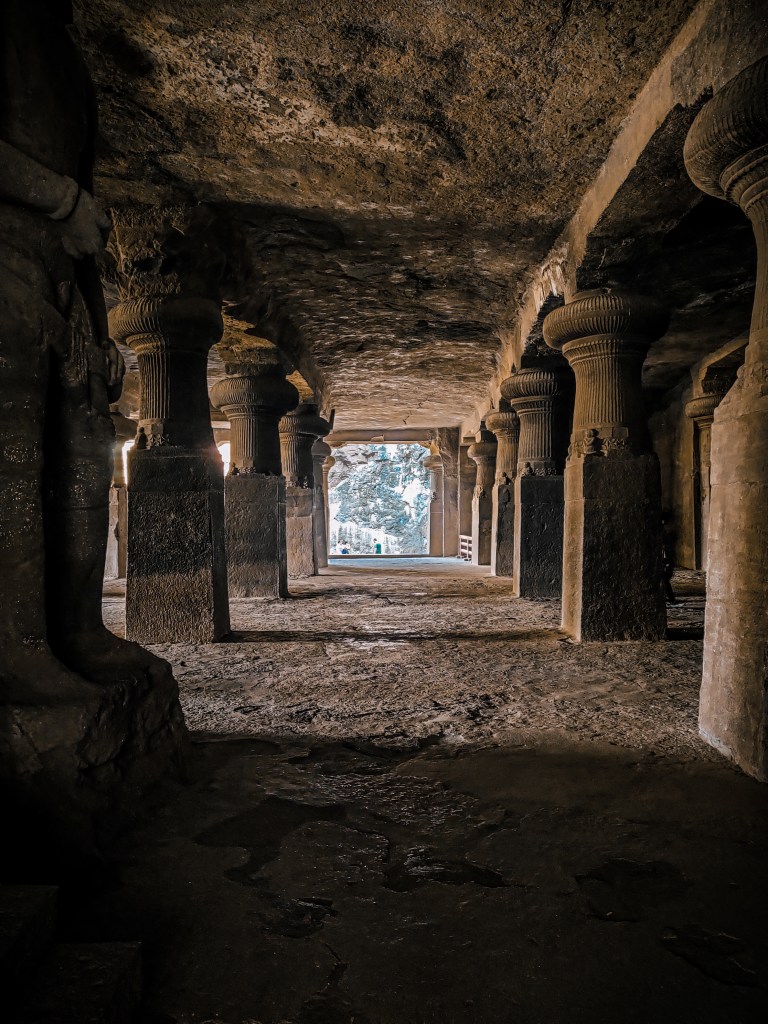
I think it’s safe to say that the Elephanta Caves are some of the most impressive sights I have ever had the privilege to behold. Built in the mid-5th to 6th centuries AD by King Krishnaraja of the Kalachuri Dynasty (as far as we think), this sacred island is dedicated to the Hindu God, Shiva, and his fellow deities. Unfortunately, the caves have seen a lot of damage over time, so many of the religious carvings and sculptures that provide us with an insight into the past are no longer visible. The exact culprits behind the damage have been much debated, but there appears to be some consensus that the Portuguese soldiers, who occupied the area in the 16th century, had utilised the caves for shooting practice, thus destroying the shrines. Regardless, the well documented fact that the “Island of Gharapuri” was renamed “Elephanta Island” by the Portuguese colonists after they discovered a statue of Ganesha on the island more than adequately demonstrates a block-headed cultural insensitivity to the heritage and spiritual significance of this island.
The way to visit the caves is to board a boat that takes an hour or so to reach the island. You must buy an official looking ticket from a sketchy looking attendant in the square who guides you to an even sketchier looking attendant guarding a medium sized, roofed boat. Once you’ve taken a pew on the boat, you just sweat it out until you reach the island after which there are a whole load of people shouting at you to buy anything from a tour of the caves to a banana. We ended up spending twenty Rupees to buy tickets to board a small children’s theme park style train that we thought would take us all the way to the caves but actually just took us a mere 200 metres round the corner. The shortlived experience was fun nonetheless and we proceeded to climb the multitude of steps lined by souvenir stalls to the top of the hillside to finally enter the caves.
My top tip for the caves would be to obtain a tour guide for about 200-400 Rupees who will explain the significance of each cave and the history behind the site itself. We made it to the top presuming it would be fairly self explanatory, but as soon as we saw other tourists with tour guides who explained each sculpture and carving with gusto, we felt a bit of “FOMO” (fear of missing out) and conceded to accept a short tour from one of the security guards who charged us just 100 Rupees. Although a more reasonable price than the more “official” tour guides, the downside to this was that the whole explanation was in shudh Hindi (an older, more traditional form of Hindi), which was at times even difficult for my other half to understand, despite her fluency in modern Hindi (I don’t speak much Hindi, since I’m Gujrati, so I was totally non-plussed throughout).
To conclude, our limited stay in Mumbai was enjoyable, not least because of the Taj, but also because of a rekindled familiarity with my native soil. Although often deemed overwhelming, the smog laden cultural hot spot harboured a whole host of sights to see and experiences to be had. I certainly hope to return once again to see more of Mumbai, particularly those parts that are perhaps off the beaten track. In the meantime, this was a unique cultural initiation that suitably primed us for the rest of our upcoming adventure in the captivating continent of Asia.
 Vasudev Zaver